How to Improve Brand Visibility in AI Search Engines
A data-backed, step-by-step guide to improving brand visibility in AI search engines like ChatGPT, Perplexity, and Google AI Overviews. Includes GEO tactics, AEO tools, and an actionable checklist.
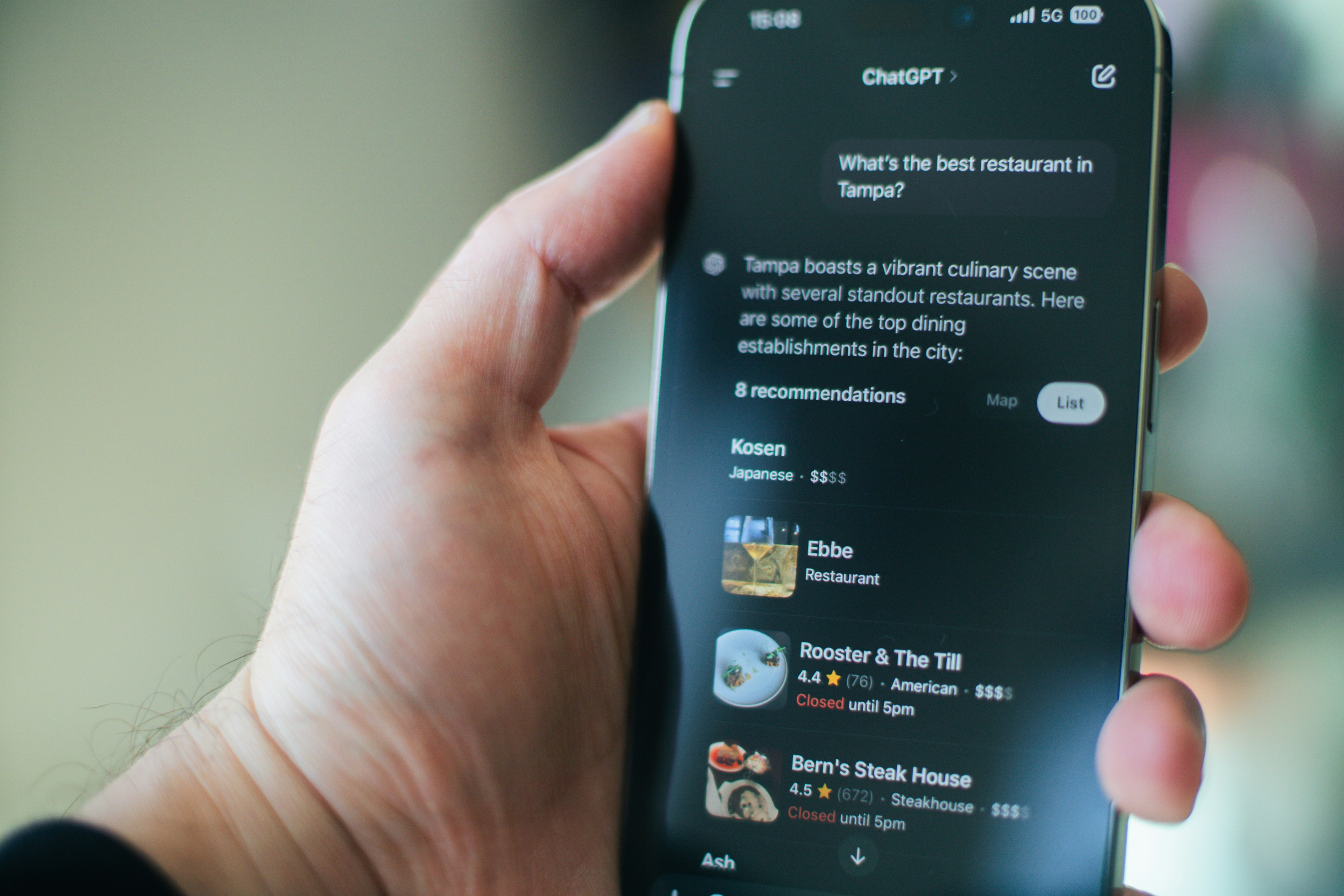
How to Improve Brand Visibility in AI Search Engines?
By Marcus Hale — Growth Strategist & AI Search Specialist
TL;DR — Core Takeaways
AI search engines (ChatGPT, Perplexity, Google AI Overviews) now decide which brands get cited before a user ever clicks a link. Traditional SEO rankings barely correlate with AI citations. This guide gives you a proven, layered framework — the AI Visibility Stack — plus a 30-day execution checklist to make your brand impossible for AI to ignore.
The core problem
83% of AI Overview citations come from pages outside the traditional top-10 results. Ranking on Google does not mean ranking in AI.
Why it matters now
AI-referred sessions grew 527% YoY. LLM visitors convert 4.4× better than organic visitors.
The winning formula
AEO + GEO = Entity clarity + Answer-first content + Off-site citation authority + Consistent measurement.
Your first move
Audit your AI visibility baseline, then prioritize third-party citation building — brands are 6.5× more likely to be cited through third-party sources than their own domain.
Key Definitions at a Glance
AI Search Visibility
How frequently and favorably a brand appears in AI-generated answers across ChatGPT, Perplexity, Google AI Overviews, and Copilot — determined by entity clarity, content structure, and off-site citations, not keyword rankings.
AEO — Answer Engine Optimization
The practice of structuring content so AI systems can extract and cite it directly in answers — through FAQPage schema, answer-first formatting, and machine-readable data blocks.
GEO — Generative Engine Optimization
The discipline of engineering content signals — statistical density, source citations, expert quotations — to earn inclusion in AI-generated responses. Formalized by Princeton researchers (Aggarwal et al., 2024).
Brand Entity
The structured, unambiguous identity signal — name, category, differentiation — that tells AI models who a brand is. Inconsistent entities cause AI to hedge or omit a brand entirely.
RAG — Retrieval-Augmented Generation
The two-phase AI process: first retrieve candidate documents (like SEO), then generate an answer by quoting and paraphrasing the most structurally clear and factually dense sources (where AEO/GEO wins).
Prompt Coverage Rate
The percentage of relevant buyer queries — run across AI platforms — in which a brand appears in the generated answer. The primary AI share-of-voice metric for measuring visibility performance.
Citation Share
How often a brand's domain is explicitly sourced in AI answers relative to competitor domains — indicating that content is not only retrieved but trusted and quoted in the generation step.
Citation Ecosystem
The network of off-site third-party mentions — on Reddit, review platforms, publications, LinkedIn, YouTube — that AI engines use as trust signals. Brands are 6.5× more likely to be cited through off-site sources than their own domain.
The Silent Ranking Revolution Nobody Warned You About
Quick Answer — What is AI search visibility?
AI search visibility is the measure of how frequently and favorably a brand appears in AI-generated answers across platforms like ChatGPT, Perplexity, Google AI Overviews, and Microsoft Copilot — determined not by keyword rankings but by whether AI models recognize the brand as a credible, citable source.
AI engines synthesize a single answer — your brand either appears in it or doesn't; there is no page 2.
AI-referred sessions grew 527% year-over-year (McFadyen Research, 2025) and convert at 4.4× the rate of organic visitors.
83% of AI citations come from outside the traditional top-10 search results — ranking well on Google does not guarantee AI visibility.
Visibility is determined by entity clarity, content structure, and off-site citation authority — not keyword density.
Somewhere in the last 18 months, the game changed — and most marketing teams missed the memo. Search has always been about ranking. But AI search engines don't rank. They select. They synthesize. They decide, in the generation of a single paragraph, which brands deserve to exist in the answer and which do not.
When a user types "best project management software for remote teams" into ChatGPT or Perplexity, they get a synthesized recommendation — not ten blue links. If your brand isn't in that recommendation, you're effectively invisible to that buyer. There's no page 2 to stumble onto. No position 4 to improve. Either you're cited, or you're not.
(527%: Year-over-year growth in AI-referred web sessions (Jan–May 2025)
Source: McFadyen Research, 2025
4.4×: Higher conversion rate of LLM visitors vs. organic search visitors
Source: Semrush, July 2025
83%: AI Overview citations that come from outside the top-10 organic results
Source: Search Engine Land, 2025)
The data is startling in its implications. AI-referred sessions aren't just growing — they're converting. Visitors who arrive via ChatGPT or Perplexity convert at nearly 4.4 times the rate of traditional organic visitors. And yet 83% of the pages AI cites aren't even in the traditional top-10 search results. The old playbook — obsess over rankings, build backlinks, stuff keywords — will not get you there.
This guide introduces a structured framework for building lasting AI search visibility: the AI Visibility Stack. It's a four-layer model that takes you from zero baseline to measurable AI presence — with specific tactics, tool recommendations, and a 30-day checklist you can execute this month.
Why SEO Alone No Longer Cuts It
Quick Answer — What is the difference between SEO, AEO, and GEO?
SEO optimizes pages to rank in traditional link-based search results. AEO (Answer Engine Optimization) structures content so AI systems can extract and cite it directly in answers. GEO (Generative Engine Optimization) engineers content signals — citations, statistics, expert quotations — to earn inclusion in AI-generated responses.
SEO= gets your page retrieved by the AI's underlying index.
AEO= makes your content extractable and citable by answer engines.
GEO= amplifies citation probability through factual density and authority signals.
All three are required in 2026. SEO alone leaves you invisible in the generation step.
Let's be clear about something: SEO isn't dead. Google's organic index is still the foundation that AI crawlers build on. But SEO alone is now necessary — not sufficient.
Traditional SEO optimizes for retrieval. AI visibility requires optimizing for generation. The difference is fundamental.
Generative engines operate through Retrieval-Augmented Generation (RAG) — a two-phase process where the model first fetches candidate documents (retrieval), then decides what to quote, paraphrase, and attribute based on structural clarity, factual density, and entity consistency (generation). SEO wins the retrieval phase. AEO and GEO win the generation phase. Most brands only optimize for one of them.
⚠ Critical Gap
Traditional SEO ranking correlates weakly with AI citation rates. A study by BCG confirmed that AI systems often cite pages that are not the top organic performers. Strong rankings can coexist with near-zero AI visibility — and vice versa. Measuring only one means operating with a broken compass.
The field has developed two disciplines to address this gap:
AEO (Answer Engine Optimization) is the practice of structuring content so AI assistants can identify, extract, and directly cite it in responses — through FAQPage schema, answer-first formatting, and machine-readable data blocks.
GEO (Generative Engine Optimization) is the discipline of engineering content to earn inclusion in AI-generated answers — by maximizing statistical density, embedding source citations, and using expert quotations — formalized in the 2024 Princeton KDD paper (Aggarwal et al., arXiv:2311.09735). The Princeton research found that citing authoritative sources lifted AI visibility by +40%, specific statistics by +37%, and embedded expert quotations by +30%.
Together, AEO and GEO form the basis of a new optimization layer that sits on top of traditional SEO. SEO gets your page retrieved. AEO and GEO get your brand cited.
The AI Visibility Stack: A 4-Layer Framework
Quick Answer — What is the AI Visibility Stack?
The AI Visibility Stack is a four-layer optimization framework — Entity Foundation, Content Architecture, Citation Ecosystem, and Signal Measurement — where each layer builds on the one below it, and skipping any layer creates a hard ceiling on how visible a brand can become in AI-generated answers.
Layer 1 — Entity Foundation: Consistent brand identity, structured data, and knowledge graph presence.
Layer 2 — Content Architecture: Answer-first structure, FAQ schema, and fact-dense, attributable text.
Layer 3 — Citation Ecosystem: Off-site mentions on Reddit, review platforms, publications, and social media.
Layer 4 — Signal Measurement: Monthly tracking of prompt coverage, citation share, and sentiment.
Most brands approach AI visibility as a collection of disconnected tactics — add schema here, post on Reddit there. What they're missing is a system: a layered architecture where each layer supports the one above it.
The AI Visibility Stack is an original framework that organizes every optimization effort into four interdependent layers. Skipping a layer creates a ceiling on how visible your brand can become.
The AI Visibility Stack — 4-Layer Model
1 Entity Foundation
Ensure AI models unambiguously know who you are: consistent brand name, clear category definition, structured data, and a strong Wikipedia/Wikidata presence. Without this, AI conflates or ignores you.
2 Content Architecture
Structure your owned content for AI extraction: answer-first paragraphs, FAQ schema, fact-dense language, and canonical data blocks. This is what gets your content quoted rather than skipped.
3 Citation Ecosystem
Build off-site authority across the channels AI trusts most: Reddit, YouTube, LinkedIn, trusted publications, review platforms. Brands are 6.5× more likely to be cited via third-party sources than their own domain.
4 Signal Measurement
Track AI visibility as a KPI: prompt coverage, citation share, sentiment, and competitive benchmarks — measured monthly. You can't improve what you don't measure.
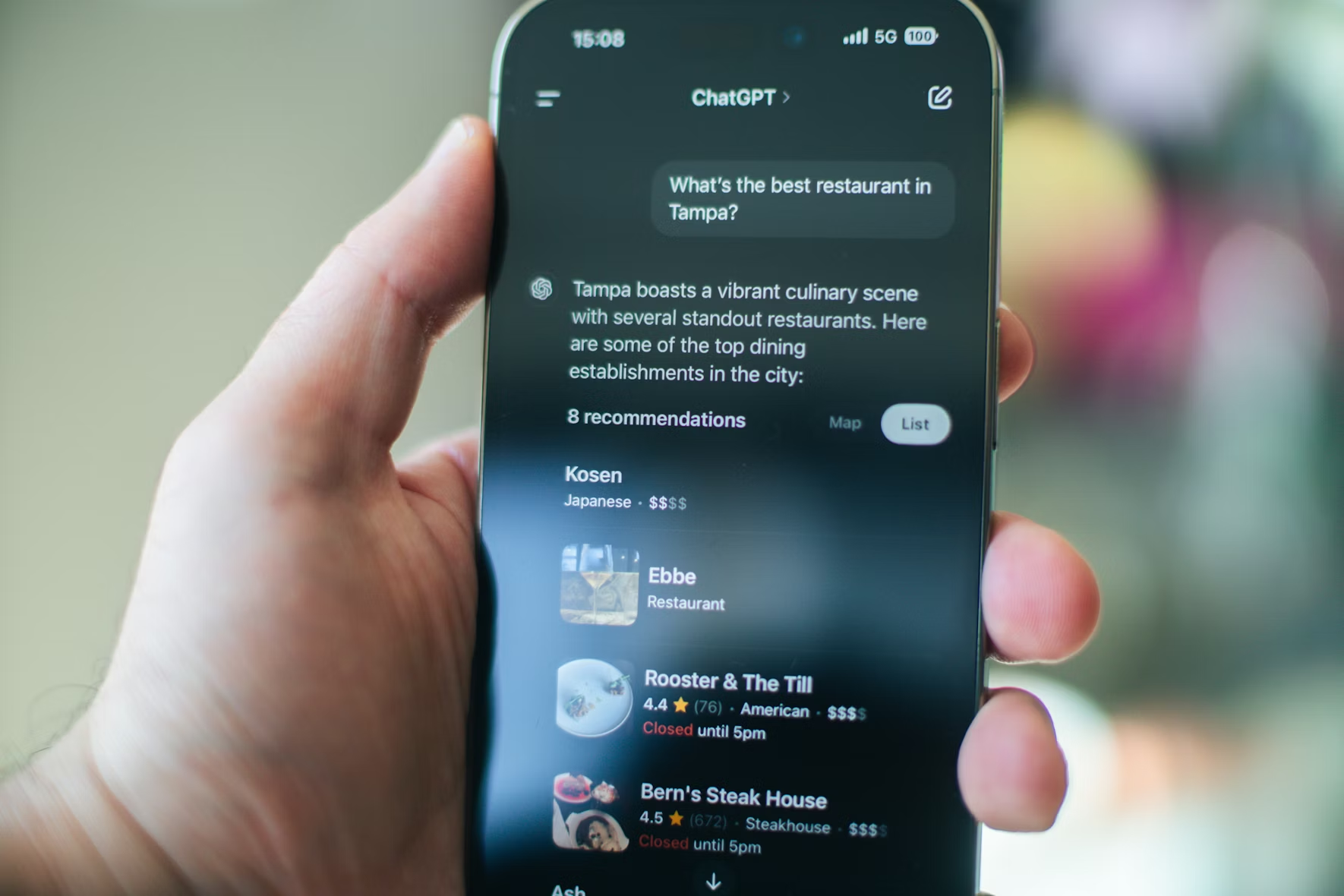
Layer 1 — Build Your Entity Foundation
Quick Answer — What is a brand entity in AI search?
A brand entity in AI search is the structured, consistent set of signals — name, category descriptor, differentiation claim, schema markup, and knowledge graph presence — that allows AI models to unambiguously identify, categorize, and accurately describe a brand in generated answers.
Standardize brand name, description, and category language across all platforms — website, social, press, Wikipedia, and Google Business Profile.
Implement Organization schema with sameAs links to all official profiles to help AI engines connect the dots.
Claim your Google Knowledge Panel and create or update your Wikidata entry — both are primary LLM reference sources.
Entity inconsistency is an invisible tax: AI models that encounter conflicting descriptions will hedge or omit your brand entirely.
Every AI model builds its understanding of your brand from an aggregated web of signals. The more consistent and structured those signals are, the more confidently AI will reference you — and the more accurately it will describe you.
Define and Lock Your Brand Entity
Your brand entity — the structured, unambiguous identity signal that tells AI models who you are, what category you belong to, and what distinguishes you — is the atomic unit of AI search recognition. It has three components: your name, your category descriptor, and your differentiation claim. The problem is that most brands use inconsistent language across their website, social profiles, press releases, and third-party listings. AI models encounter these inconsistencies and either hedge or ignore.
Choose one canonical formulation (e.g., "Acme — the AI-powered project management platform for distributed teams") and enforce it everywhere: website title tags, meta descriptions, social bios, About pages, Google Business Profile, press kit language.
Implement Schema Markup
Schema markup is structured JSON-LD code embedded in a webpage that communicates machine-readable facts — organization name, FAQ pairs, article authorship, breadcrumb hierarchy — directly to search engines and AI crawlers. For AI visibility, the highest-priority schemas are:
Organization — name, URL, logo, sameAs (links to all official profiles)
FAQPage — the single highest-leverage schema for AEO, directly feeding Q&A extraction
HowTo — for instructional content
Article / BlogPosting — with datePublished, dateModified, and author entity
BreadcrumbList — site architecture clarity
Research from Northwestern University's Medill School found that informational queries trigger Google AI Overviews 98% of the time, versus only 40% for commercial queries (Northwestern, 2025). Pages with clear schema markup are disproportionately represented in those informational trigger results.
Claim and Optimize Your Wikipedia / Knowledge Graph Presence
Wikipedia and Wikidata are primary training and reference sources for virtually all major LLMs. If your brand has a Wikipedia page, keep it scrupulously accurate and up to date. If it doesn't, and your brand meets notability criteria, creating one is among the highest-ROI activities in this entire guide. Supplement this by claiming your Google Knowledge Panel and verifying your Wikidata entry.
Layer 2 — Architect Your Content for AI Extraction
Quick Answer — How should content be structured for AI search?
Content optimized for AI extraction leads with a direct 40–60 word answer, uses FAQPage schema with natural-language Q&A blocks, replaces every vague claim with a cited statistic, and consolidates key facts into machine-readable tables — making it trivial for AI to quote, paraphrase, and attribute.
Answer-first structure: Place the direct answer in the first 50 words of every section — mirrors how RAG systems extract content.
Statistical density: Including specific statistics boosts AI citation probability by +37% (Princeton GEO Study, 2024).
FAQPage schema: 5–8 Q&A blocks per high-value page; answers of 40–80 words each.
Canonical data tables: Consistent pricing, specs, and comparison data eliminate AI hedging due to conflicting information.
The Princeton GEO research (Aggarwal et al., 2024) provides the clearest quantitative picture we have of what causes AI engines to cite content. The hierarchy is clear: statistical density and source attribution dominate keyword optimization by a wide margin.
The Answer-First Principle
Every piece of content that targets an informational query should lead with the answer, not build toward it. Structure every major section like a press release inverted pyramid: the most important sentence first, supporting detail second, background last. This mirrors how RAG systems extract content — they look for the clearest, most direct response to a query and quote it.
Practically: if your page title is "How to reduce customer churn," your opening paragraph should contain a direct, self-contained answer to that question within the first 50 words. HubSpot's research recommends direct answers of 40–60 words to maximize AI extraction probability.
Fact-Dense, Attributable Paragraphs
Replace every vague claim with a number. Not "many companies are moving to AI search" but "Gen AI traffic is growing 165× faster than organic search traffic (WebFX, June 2025)." The Princeton study confirmed statistical density is the second-strongest citation predictor after source attribution.
"The highest-impact GEO tactics aren't about keywords — they're about making your content quotable. Statistics, citations, and expert attributions are the signals AI engines use to decide which content earns a mention."— Aggarwal et al., Princeton University GEO Study (arXiv:2311.09735), 2024
FAQ Schema as a Citation Engine
FAQPage schema is JSON-LD markup that encodes question-and-answer pairs directly into a page's metadata, making those Q&A blocks machine-readable and trivially extractable by AI crawlers — it is the single most direct pipeline from your content to AI citation. Structure your high-value pages with at least 5–8 FAQ blocks targeting natural-language questions your customers actually ask. Use tools like Google Search Console's search queries report and tools like AnswerThePublic to surface real question phrasing, then write concise, direct answers of 40–80 words each. These blocks become raw material that AI models lift directly into answers.
Canonical Data Blocks
Consolidate prices, specifications, comparison data, and key facts into consistently formatted summary tables or structured lists. AI engines prefer canonical facts in machine-readable formats. If your pricing page, features page, and product comparison page all state your pricing differently, AI is likely to hedge or omit you. Consistency is a trust signal.
💡 Pro Tip — Content Refresh Cadence
AI systems weight recency as a credibility signal. High-value informational pages should be reviewed and meaningfully updated at least quarterly. Add a "Last updated" timestamp with schema markup. Stale content loses citation probability even if it was once authoritative.
Layer 3 — Build a Citation Ecosystem Off Your Own Site
Quick Answer — Why do off-site citations matter for AI visibility?
Off-site citations matter for AI visibility because 85% of brand mentions in AI-generated responses originate from third-party pages — not brand-owned domains — and brands with the highest volume of cross-web mentions are 10× more likely to be cited in AI Overviews than those with thin off-site presence.
Brands are 6.5× more likely to be cited via third-party sources than through their own website (Search Engine Land, 2025).
48% of AI Overview citations come specifically from community platforms like Reddit and YouTube.
The priority channels: Reddit → Review platforms (G2, Capterra) → LinkedIn → YouTube → Trade publications → Podcast show notes.
AI-era digital PR targets citations, not just backlinks — accuracy and context of the mention matters as much as the placement.
This is the layer most brands underinvest in — and it's the layer with the highest leverage for AI visibility.
An Ahrefs study of 75,000 brand mentions across AI Overviews confirmed that the strongest correlates with AI inclusion are all off-site factors. Brands in the top 25% for web mention frequency had over 10× more AI Overview mentions than the next tier. More striking: 85% of brand mentions in AI responses originate from third-party pages, not from brands' own domains (Search Engine Land, 2025). And 48% of AI Overview citations come specifically from community platforms like Reddit and YouTube.
The High-Authority Channel Matrix
AI engines weight citation sources differently by category, but across industries, these channels consistently deliver the highest citation rates:
Reddit — the single most over-represented source in AI answers relative to its domain authority. Authentic, contextual mentions in relevant subreddits are highly weighted.
Industry review platforms (G2, Capterra, Trustpilot) — aggregate credibility signals. Volume and recency of reviews matter.
LinkedIn thought leadership — especially long-form articles on verified company pages.
YouTube — AI increasingly surfaces video content; tutorial-format videos mentioning your brand build citation surface area.
Authoritative publications — earned media placements in niche trade publications, not just top-tier press.
Podcast transcripts and show notes — increasingly indexed and used as reference material by AI models.
Medium and Substack — accessible publishing platforms with domain authority that AI models trust.
Digital PR With AI Visibility Goals
AI-era digital PR is the practice of earning accurate, contextual brand mentions on the off-site sources that AI engines trust — Reddit, trade publications, review platforms, and authoritative blogs — with the goal of increasing citation rate in AI-generated answers, rather than simply acquiring backlinks for SEO. Traditional digital PR chases backlinks. AI-era digital PR chases citations. The goal is to get your brand mentioned accurately, in context, on sources that AI systems trust. Before launching any PR campaign, audit which domains AI currently cites in your category — tools like Vismore or Profound can surface this data directly. Then prioritize outreach and partnerships with those specific publications and communities.
Layer 4 — Measure AI Visibility as a Strategic KPI
Quick Answer — How do you measure AI search visibility?
AI search visibility is measured through four monthly KPIs: Prompt Coverage Rate (what % of buyer queries include your brand), Citation Share (how often your domain is sourced), Sentiment Score (the tone of AI descriptions), and Platform Distribution (your visibility split across ChatGPT, Perplexity, Google AI Overviews, Gemini, and Copilot).
Prompt Coverage Rate — Run 20–30 representative buyer queries monthly; track what % return your brand in the answer.
Citation Share — Track how often your domain is explicitly sourced vs. competitor domains across AI platforms.
Sentiment Score — Monitor whether AI describes your brand positively, neutrally, or with hedging language.
Platform Distribution — Identify which AI engines cite you most/least to prioritize platform-specific efforts.
The single most important operational shift in this guide is treating AI visibility as a measurable KPI — tracked monthly, reported quarterly, and benchmarked against competitors — not as a periodic experiment.
Brands that combined AEO with GEO in Q4 2025 saw average AI visibility gains in 90-day periods, while those ignoring entity consistency or structured data slipped further behind (AKII AI Visibility Index Q4 2025). The gap between brands actively optimizing and those that aren't compounds monthly.
The Core Measurement Framework
Track four metrics on a monthly cadence:
Prompt Coverage Rate — the percentage of relevant buyer queries, run across AI platforms, in which your brand appears in the generated answer. This is your primary AI share-of-voice metric.
Citation Share — how often your domain URL is explicitly sourced in AI answers relative to competitor domains. High citation share indicates your content is both retrieved and trusted for generation.
Sentiment Score — the measured tone of AI descriptions of your brand: positive, neutral, hedged, or negative. AI doesn't just mention brands — it frames them, and negative framing harms conversion even when visibility is high.
Platform Distribution — your visibility split across ChatGPT, Google AI Overviews, Perplexity, Gemini, and Copilot, revealing platform-specific gaps to prioritize in your optimization efforts.
AEO & AI Visibility Tools: What's Available in 2026
Quick Answer — What is an AEO tool?
An AEO (Answer Engine Optimization) tool is a platform that tracks how frequently and accurately a brand appears in AI-generated answers across ChatGPT, Perplexity, Google AI Overviews, Gemini, and Copilot — providing prompt-level monitoring, competitive benchmarking, and actionable recommendations to increase citation rates.
Vismore ($99–$399/mo) — Monitoring + strategy + one-click publishing to high-authority channels. Best for teams that need to act, not just track.
Profound — Enterprise intelligence platform ($58.5M funded). Deep competitive AI market positioning. Best for large organizations.
Semrush AI Toolkit — AEO add-on for existing Semrush users. Convenient but less specialized.
Peec AI — UI-scraping methodology (real user results, not API estimates). 115+ language support. Monitoring-focused.
The AEO tooling landscape matured significantly in 2025. Here's an honest comparison of the major platforms available in 2026, with verified pricing from each vendor's official pricing page.
Tool | Best For | Key Differentiator | Pricing (Verified) |
|---|---|---|---|
Vismore | Teams needing monitoring + execution in one workflow | Goes beyond monitoring: generates 30+ actionable content strategies and enables one-click publishing to Reddit, Medium, LinkedIn, and more. Bridges the insight-to-execution gap most tools leave open. | Starter $99/mo · Pro $199/mo · Advanced $399/mo · Enterprise: Custom. All plans include 7-day free trial. (vismore.ai/pricing) |
Profound | Large enterprise brands formalizing AEO as a strategic function | Best-funded platform ($58.5M from Khosla, Kleiner, Sequoia). Deep intelligence on AI market positioning. Clients include MongoDB, Figma, Zapier, Docusign. | AEO add-on from $199/mo; enterprise custom pricing. (profound.io) |
Semrush AI Toolkit | Existing Semrush users wanting to add AEO coverage | Convenient extension of a familiar platform; broad keyword & visibility data. Ideal if you're already in the Semrush ecosystem. | Add-on to existing Semrush plans (semrush.com/pricing) |
Peec AI | Teams prioritizing data accuracy via UI scraping | Simulates real user interactions rather than API calls; 115+ language support; fastest-funded platform (€650K ARR in 4 months, $21M Series A). Monitoring-focused. | Starts ~€49/mo; enterprise custom. (peec.ai) |
Ahrefs Brand Radar | Teams already using Ahrefs for SEO who want AI visibility | AI visibility tracking layered onto Ahrefs' existing backlink and keyword data. Strong integration for unified SEO + AEO reporting. | Included in Ahrefs plans from $129/mo. (ahrefs.com/pricing) |
A word on tool selection philosophy: most platforms tell you whether you're visible. Fewer tell you why you're not. Even fewer help you actually do something about it with actionable content and distribution workflows. That gap — from insight to execution — is the most underserved problem in the category.
For teams new to AEO that want to move quickly from tracking to action, Vismore's execution-first approach stands out: it identifies the specific prompts your customers ask, ranks them by opportunity, generates content strategies, and enables direct publishing to the high-authority channels AI engines trust — all within one platform. For enterprises already running sophisticated analytics and needing intelligence-grade competitive positioning, Profound's depth is hard to match. Most teams with tighter budgets or existing tool stacks will find Semrush or Ahrefs' AEO integrations a practical entry point.
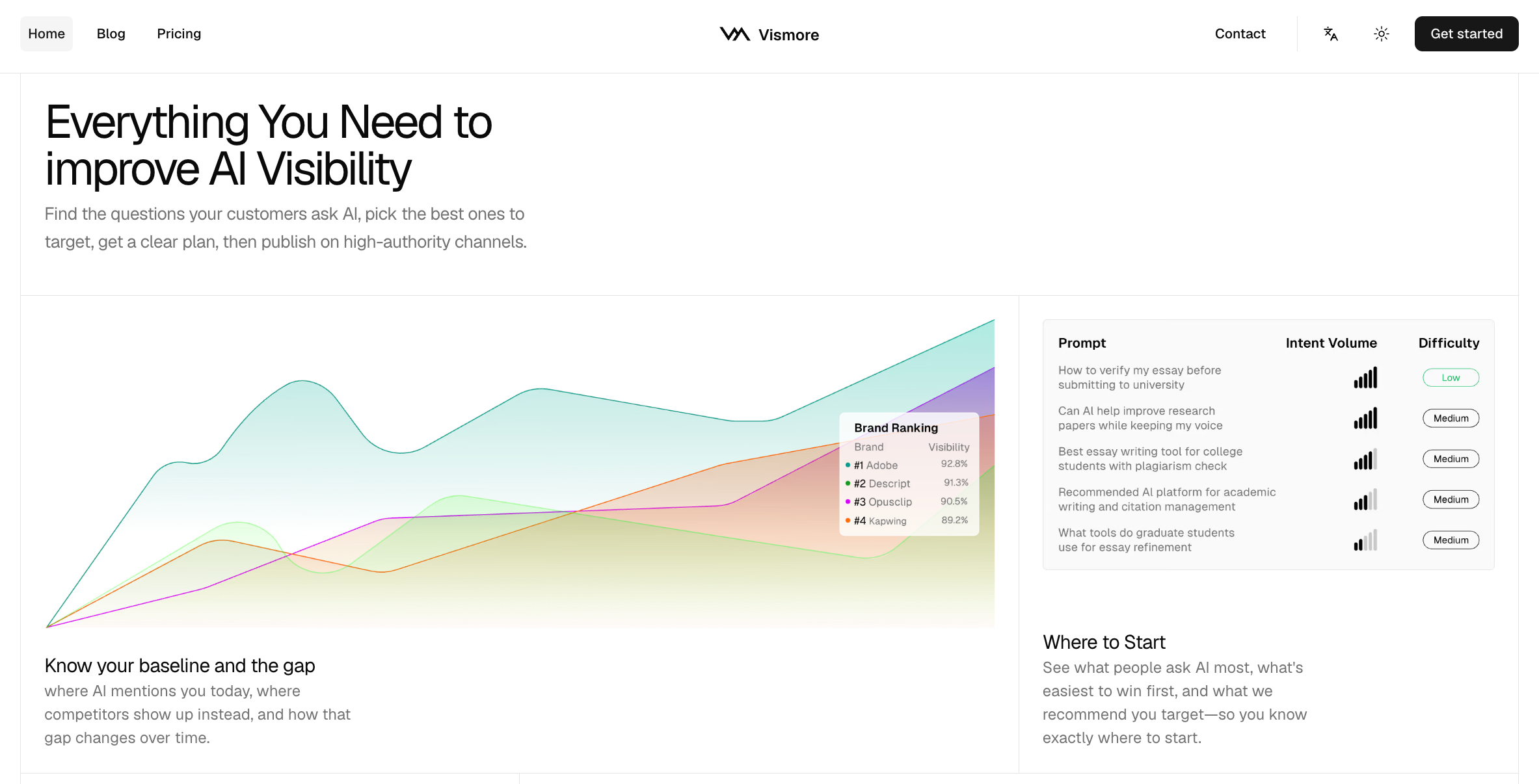
The 30-Day AI Visibility Execution Checklist
Week 1 — Baseline & Audit
Run 20–30 buyer-intent prompts across ChatGPT, Perplexity, and Google AI Overviews. Document which brands appear and which sources are cited.
Audit your brand entity consistency: compare your name, description, and category language across website, LinkedIn, Google Business Profile, Wikipedia, and press materials. Standardize all inconsistencies.
Set up an AEO tracking tool (Vismore, Profound, Semrush AI Toolkit, or Peec AI) and configure baseline prompt coverage, citation share, and sentiment tracking.
Identify the top 5–10 third-party domains AI currently cites in your category. Add them to your PR target list.
Verify Organization and FAQPage schema is implemented correctly on your 10 highest-traffic pages using Google's Rich Results Test.
Week 2 — Content Architecture Overhaul
Rewrite the opening paragraph of your top 5 informational pages to lead with a direct, 40–60 word answer to the primary query.
Add FAQPage schema with 6–8 natural-language question-answer blocks to every major product and solution page.
Audit every major claim on high-value pages. Replace vague assertions with specific statistics, and add inline source attribution for each one.
Create or update a canonical "comparison" page that positions your brand against 2–3 key competitors. These are among the highest-cited page types in AI answers.
Consolidate pricing and feature specs into a consistent, machine-readable summary table on your pricing page. Eliminate discrepancies across pages.
Add "Last Updated" timestamps with schema markup to all high-value pages. Schedule quarterly content refreshes.
Week 3 — Citation Ecosystem Expansion
Identify 3–5 active Reddit communities (subreddits) where your target audience asks questions relevant to your category. Participate authentically; provide genuinely useful answers that naturally reference your brand.
Publish a long-form thought leadership article on your LinkedIn company page addressing a specific buyer pain point with statistics and expert framing.
Check G2, Capterra, and Trustpilot. Actively solicit recent reviews — review recency and volume directly correlate with AI citation frequency.
Pitch 2–3 original data stories or proprietary insights to trade publications in your category. Original research is cited at significantly higher rates than opinion pieces.
Publish a Medium or Substack article targeting a specific informational query in your category, with your brand mentioned naturally in context.
Week 4 — Measure, Iterate, Report
Re-run your original 20–30 prompts and document changes in brand mention frequency and citation sources vs. Week 1 baseline.
Review your citation share across platforms (ChatGPT, Perplexity, Google AIO). Identify which platforms show the largest gap vs. competitors and prioritize next month's effort there.
Analyze sentiment: are AI descriptions of your brand accurate and positive? If AI is hedging or including negative framing, identify which third-party sources are driving that narrative and develop a correction strategy.
Build an "AI Visibility Dashboard" in your reporting stack: prompt coverage rate, citation share, platform distribution, and sentiment score — tracked monthly, reported to leadership quarterly.
Identify your three highest-opportunity prompts (high query volume, low current brand visibility) and commit to a targeted content and citation-building campaign for Month 2.
Advanced Tactics: Moving from Cited to Recommended
Quick Answer — What is the difference between being cited and being recommended by AI?
Being cited means AI references your content as a source; being recommended means AI explicitly names your brand as the preferred solution for a user's need — a far more valuable outcome achieved through original research, category-defining language, and consistent authority signals across the web.
Publish original research — proprietary data is cited at disproportionately high rates because it is genuinely scarce and non-duplicable.
Coin category language — brands that define the vocabulary of their space get cited every time that vocabulary is used.
Get into training-adjacent sources — Wikipedia, major news outlets, and academic citations create compounding visibility across model updates.
Optimize for conversational queries — map content to the exact full-sentence questions customers type into ChatGPT, not just keyword fragments.
There's an important distinction between being cited (your content is sourced) and being recommended (AI explicitly names your brand as the solution). The tactics above build citation. These advanced moves push toward recommendation.
Publish Original Research
Proprietary surveys, benchmark reports, or longitudinal datasets are the gold standard of AI-citable content. Original data is cited at disproportionately high rates because it is genuinely scarce. Even a 50-respondent survey with clean methodology is enough to generate quotable statistics.
Earn Brand Mentions in AI Training Adjacent Sources
Wikipedia, academic citations, government databases, and major news outlets form the backbone of LLM training data. Getting mentioned in these sources creates compounding visibility that persists across model updates.
Develop Category-Defining Language
Brands that coin the terminology for their category get cited every time that terminology is used. If you can define the problem your category solves in a phrase that becomes industry standard, AI engines will associate your brand with the category itself.
Monitor and Correct AI Misrepresentations
AI models sometimes describe brands inaccurately. Use AEO tools to monitor sentiment and accuracy monthly. When AI misrepresents you, the fix is to publish clear, authoritative content on the topic — not to contact the AI platform. More authoritative content on the topic pushes out the misinformation over time.
Optimize for Conversational Queries, Not Just Keywords
AI search is driven by full-sentence questions, not keyword fragments. Use your customer support tickets, sales call notes, and community platform questions to build a library of exact natural-language questions people ask about your category. Create content that mirrors this phrasing precisely.
The Five Mistakes That Kill AI Visibility
Quick Answer — Why is my brand invisible in AI search?
Brands are invisible in AI search for five reasons: inconsistent brand entity signals, content that isn't structured for extraction, a thin off-site citation presence, negative or absent sentiment in third-party sources, and no active measurement of AI visibility as a tracked KPI.
Entity inconsistency — conflicting brand names or descriptions across platforms cause AI models to hedge or omit.
Website-only optimization — 85% of AI citations come from third-party pages; ignoring off-site presence creates a hard ceiling.
Negative off-site sentiment — critical Reddit threads and bad reviews will be reflected in AI descriptions of your brand.
No measurement — without tracking prompt coverage and citation share, teams can't identify where they're absent or whether their work is having any effect.
Understanding what not to do is as valuable as the positive tactics. These five mistakes are consistently observed across brands that invest in AEO but fail to gain traction.
1. Treating AI visibility as a one-time project. AI models update continuously. A brand that was well-cited in Q1 can slip by Q3 if competitors improve and the brand stagnates. This is a monthly maintenance function, not a launch-and-forget campaign.
2. Optimizing only your own domain. Given that 85% of AI brand citations originate from third-party pages, a brand that invests exclusively in its own website will hit a hard ceiling on AI visibility regardless of how well-structured its content is.
3. Ignoring sentiment. AI doesn't just cite brands — it describes them. If the off-site signals about your brand skew negative (critical Reddit threads, bad reviews, negative press), AI will reflect that framing even if it mentions you. Reputation management is now an AEO function.
4. Using inconsistent brand language. Entity confusion is an invisible tax on every other optimization effort. If AI models encounter ten different descriptions of who your brand is and what you do, they hedge or omit. Pick one formulation and enforce it.
5. Measuring only whether you appear, not how you appear. Visibility without sentiment or accuracy analysis is incomplete. Being cited as "a lower-cost alternative with limited features" is visibility — but it's not the visibility you want. Track the quality and framing of AI mentions, not just frequency.
Frequently Asked Questions
What is the difference between SEO, AEO, and GEO?
SEO (Search Engine Optimization) optimizes pages to rank in traditional search result lists. AEO (Answer Engine Optimization) structures content so AI assistants can extract and directly cite it in response to user questions. GEO (Generative Engine Optimization), formalized by Princeton researchers in 2024, is the broader discipline of engineering content to earn inclusion in AI-generated answers — including statistical density, source attribution, and expert quotations. In practice: SEO gets you retrieved, AEO and GEO get you cited.
Does appearing in Google's top 10 results guarantee visibility in AI answers?
No. Research consistently shows that 83% of AI Overview citations come from pages outside the traditional top-10 results (Search Engine Land, 2025). AI engines optimize for answer quality and source authority, not ranking position. A well-structured page on a medium-authority domain can outperform a top-ranking page that lacks answer-first content structure and schema markup.
How long does it take to see results from AEO optimization?
Technical changes like schema markup can be reflected in AI answers within days to weeks, as AI crawlers re-index your content. Content architecture improvements typically show measurable citation rate changes within 4–8 weeks. Off-site citation building — the highest-leverage activity — compounds over 2–3 months as new third-party mentions are indexed and weighted by AI systems. Set a 90-day baseline measurement period and track prompt-level changes monthly.
Which AI search platforms should I prioritize first?
Start with the platform where your customers are most active. For B2B brands, ChatGPT and Perplexity are the primary research tools for buyers. For consumer and local businesses, Google AI Overviews — which now reach 2 billion monthly users globally (DesignRush, 2025) — is the highest-priority target. ChatGPT is now the biggest AI referrer by traffic, sending more referral traffic than Reddit and LinkedIn combined (Ahrefs, June 2025). Measure across all major platforms (ChatGPT, Perplexity, Google AIO, Gemini, Copilot), but allocate execution resources based on where your buyers actually search.
Do I need a dedicated AEO tool, or can I use Semrush or Ahrefs?
It depends on your team's maturity and goals. Semrush's AI Toolkit and Ahrefs Brand Radar provide solid entry points for teams already embedded in those platforms. For teams that want monitoring, prompt-level competitive intelligence, and direct execution support (content generation + channel publishing), dedicated AEO platforms like Vismore offer a more complete workflow. Vismore is particularly useful for lean teams that need both strategic direction and ready-to-ship content rather than just data dashboards. Enterprise organizations with dedicated SEO and analytics teams often use Profound for its depth and competitive intelligence at scale.
Is Reddit really that important for AI visibility?
Disproportionately so, yes. Research shows that 48% of AI Overview citations come from community platforms like Reddit and YouTube (Search Engine Land, 2025). AI models weight Reddit highly because it contains authentic, contextual, user-generated discussion — exactly the kind of content that mirrors how real people talk about products and services. Authentic participation (not spam) in relevant subreddits is one of the highest-ROI off-site activities in an AEO strategy.
What makes a brand "invisible" to AI search engines?
Four factors most commonly cause AI invisibility: (1) Entity ambiguity — inconsistent brand naming and description across platforms confuses AI categorization. (2) Lack of structured content — unformatted, keyword-stuffed pages with no clear Q&A structure can't be easily extracted. (3) Thin third-party presence — brands that exist primarily on their own domain, without meaningful off-site mentions across Reddit, review platforms, and publications, are treated as low-authority by AI systems. (4) No measurement baseline — teams that don't track AI visibility can't identify where they're absent and can't measure whether their efforts are working.
Can I pay AI platforms to feature my brand in answers?
No. As of 2026, organic AI visibility is earned, not bought. None of the major AI answer engines (ChatGPT, Perplexity, Google AI Overviews) sell paid placement within their organic AI-generated answers. Google has indicated that AI Overviews represent organic visibility opportunities, not paid positions. The path to AI visibility is entirely through content quality, authority signals, and citation ecosystem building — which is why it's a durable competitive advantage for brands that do the work.
About the Author
Marcus Hale is a growth strategist and senior SEO expert specializing in search-driven acquisition and AI visibility. He previously served as Director at a leading SEO agency, where he helped dozens of companies scale organic growth through advanced search strategies. Today, Marcus works with consumer brands to improve their visibility in AI-powered search, helping them get discovered and recommended by large language models.
Key Sources & References
Aggarwal, P., et al. (2024). "GEO: Generative Engine Optimization." Princeton University. arXiv:2311.09735. https://arxiv.org/abs/2311.09735
McFadyen Research (2025). AI-Referred Session Growth Study. Q1–Q2 2025.
Semrush (2025). AI Search Statistics 2025. https://www.semrush.com/blog/ai-search-statistics/
Search Engine Land (2025). Google AI Overview Links: Deep Content Pages Analysis. https://searchengineland.com/google-ai-overview-links-deep-content-pages-454108
Pew Research Center (July 2025). AI Overview Impact on Search Behavior.
Seer Interactive (November 2025). Organic CTR Study: AI Overview Impact.
Ahrefs (June 2025). AI Traffic and Referral Study. https://ahrefs.com/blog/
WebFX (June 2025). Gen AI Traffic Growth Analysis.
Northwestern University Medill School (2025). AI Overviews Study: Query Type Trigger Rates.
DesignRush (2025). Google AI Overviews Statistics. https://www.designrush.com/
AKII (December 2025). AI Visibility Index Q4 2025. https://akii.com/blog/ai-visibility-index-q4-2025
Vismore Pricing (verified April 2026). https://www.vismore.ai/pricing
NoGood (February 2026). The 10 Best AEO Tools for Enterprise Brands. https://nogood.io/blog/best-aeo-tools-enterprise-brands/