AI Search Monitoring Guide: Track & Improve Visibility in ChatGPT, Google AI Overviews & More
Learn how AI search monitoring helps you track citations, brand mentions, and share of voice across ChatGPT, Google AI Overviews, Perplexity, and more. Discover strategies to improve visibility, close SEO gaps, and optimize content for AI-generated answers.

AI Search Monitoring: The Complete Guide to Tracking and Improving Your Visibility in AI-Powered Search
By Lucas Bennett — Content Strategy & AI Search Expert
Search has splintered across AI platforms — and your SEO metrics haven't kept up. AI search monitoring gives you the data layer you're missing: real-time visibility into how your brand appears inside ChatGPT, Google AI Overviews, Perplexity, Gemini, and every AI surface where your customers are now finding answers.
TL;DR
AI search monitoring tracks your brand's visibility across ChatGPT, Google AI Overviews, Perplexity, and other AI-powered search systems
It replaces traditional ranking metrics with AI-native KPIs: citations, mentions, share of voice, and sentiment
It helps you optimize content for both traditional SEO and AI-generated answers — and reveals the gap between the two
Internal data from Vismore shows that citation rates can vary by over 100x across AI platforms for the same query category
Why AI Search Monitoring Matters More Than Ever
For years, SEO operated on a simple premise: rank higher on Google, get more clicks, win more business. That model still matters. But it no longer tells the full story.
As search behavior shifts toward AI-first interfaces, major SEO platforms and industry analysts have increasingly recognized AI visibility as a distinct layer of search performance measurement — one that operates independently of traditional rankings and requires its own tools, metrics, and strategy.
Today, your potential customers are getting answers from ChatGPT, Perplexity, Google AI Overviews, Gemini, and a growing list of AI-powered search surfaces — often without ever clicking a link. According to recent Conductor research, AI Overviews now appear in roughly 25% of Google searches, up from around 13% in early 2025. Meanwhile, ChatGPT alone draws over 5 billion monthly visits, making it one of the most trafficked websites on the planet. Google's AI Mode has reportedly surpassed 75 million daily active users.
The consequence is stark: approximately 93% of AI search sessions end without a single website click. Your brand might be mentioned, cited, or recommended inside an AI-generated answer — but if you're not monitoring those surfaces, you'd never know it.
This is the gap that AI search monitoring platforms are designed to fill. They don't replace traditional SEO tools. They extend your visibility into an entirely new dimension of search that conventional rank trackers were never built to measure.
What Is an AI Search Monitoring Platform?
AI search monitoring is the process of tracking how brands appear in AI-generated search results across platforms like ChatGPT, Google AI Overviews, and Perplexity, focusing on citations, mentions, and share of voice rather than traditional rankings.
An AI search monitoring platform is a specialized tool that operationalizes this process — tracking how your brand, content, and competitors appear across AI-powered search environments simultaneously and at scale. This goes well beyond checking your Google ranking for a handful of keywords. This includes AI search surfaces such as ChatGPT, Google AI Overviews, Perplexity, and other LLM-based answer engines that are reshaping how users access information.
AI search monitoring is the practice of tracking how a brand appears in AI-generated search results across platforms such as ChatGPT, Google AI Overviews, and Perplexity. It focuses on citations, brand mentions, sentiment, and share of voice rather than traditional keyword rankings.
AI search monitoring helps you:
Track citations in AI-generated answers
Measure brand mentions across AI platforms
Analyze share of voice vs competitors
Identify gaps between SEO and AI visibility
These platforms monitor several critical surfaces at once. They track AI Overviews in Google — the AI-generated summary panels that appear above organic results. They monitor LLM-powered search engines like ChatGPT Search, Perplexity, and Microsoft Copilot. They track conversational AI responses from tools like Gemini, Claude, and Grok. And they analyze voice assistant answers powered by AI backends.
What they measure differs fundamentally from traditional SEO metrics. Instead of ranking position and click-through rate, AI search monitoring focuses on:
Citation tracking — whether AI models reference your content when generating answers
Brand mention analysis — how frequently and in what context your brand appears in AI responses
Sentiment evaluation — the tone and accuracy of how AI platforms describe your brand
Share of voice — your visibility relative to competitors within AI-generated answers
Source attribution — which of your pages AI models pull from when constructing responses
Think of it this way: traditional SEO tools tell you where you rank. AI search monitoring tells you whether you exist in the conversation at all.
How Can an AI Search Monitoring Platform Improve SEO Strategy?
AI search monitoring doesn't just add new dashboards to your workflow — it fundamentally upgrades how you make SEO decisions. Here are seven specific ways it transforms your strategy from reactive to predictive.
1. It Reveals the Visibility You Can't See
The most immediate value of AI search monitoring is exposing a massive blind spot. Your content might be feeding AI-generated answers across multiple platforms without you ever knowing — or, worse, your competitors' content might be getting cited while yours is ignored.
Research from Superlines shows that citation patterns vary dramatically across AI platforms. The same brand can see citation volumes differ by as much as 615 times between different AI models. You might be highly visible in ChatGPT but virtually invisible in Perplexity or Gemini. Without platform-specific monitoring, you're operating on assumptions rather than data.
This matters because the AI search traffic channel is growing fast. Industry benchmarks show AI referral traffic now accounts for a measurable and increasing share of website visits, growing at roughly 1% month over month. ChatGPT alone drives the majority of that traffic. If you aren't tracking AI search visibility across these platforms, you're flying blind through an increasingly important channel.
2. It Redefines What "Winning" Looks Like
Traditional SEO success metrics — ranking position, organic clicks, impressions — are necessary but no longer sufficient. AI search monitoring introduces a new layer of KPIs that reflect how search actually works in 2026.
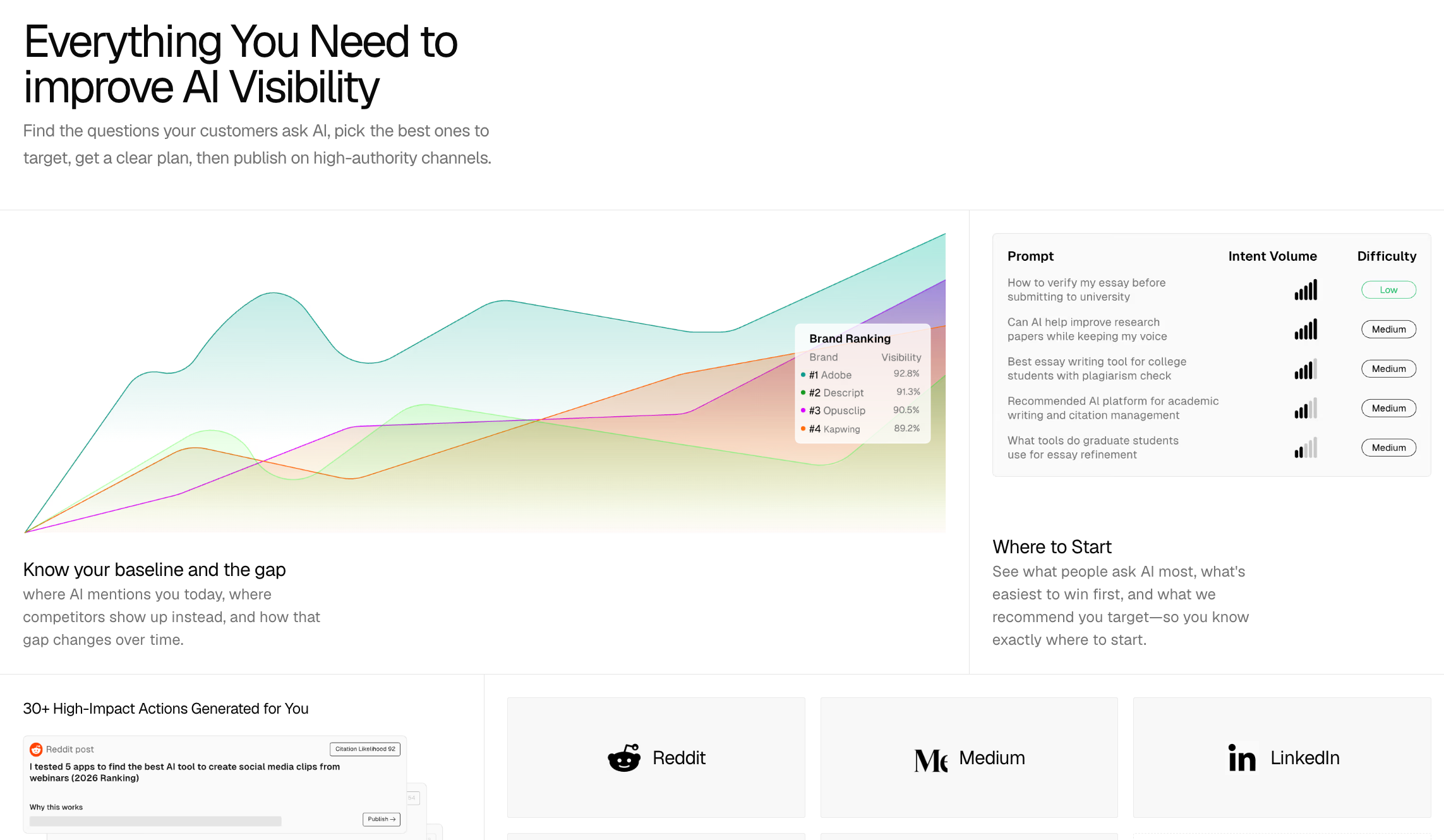
The new metrics that matter include citation rate (how often your content is cited in AI-generated answers for relevant queries), brand mention frequency (how often your brand name appears in AI responses, even without a direct citation), sentiment score (whether AI platforms describe your brand positively, neutrally, or negatively), share of voice (your citation footprint relative to competitors), and appearance rate (the percentage of monitored prompts where your brand surfaces).
One particularly powerful insight is the distinction between cited and mentioned. Your brand might be mentioned in an AI-generated response without your URL being cited as a source. This indirect influence shapes user perception — people see your brand name in a trusted AI answer — even if it doesn't immediately drive a click. Without AI monitoring, this entire influence channel is invisible.
Brands that have been cited in AI Overviews have seen significantly higher click-through rates on both organic and paid results compared to brands that weren't cited. Citation isn't just a vanity metric; it directly amplifies the effectiveness of your existing search presence.
3. It Turns Competitive Intelligence Into a Live Feed
Competitor analysis in traditional SEO typically involves periodic audits — checking rivals' backlinks, keyword rankings, and content strategies once a month or once a quarter. AI search monitoring makes this continuous and automatic.
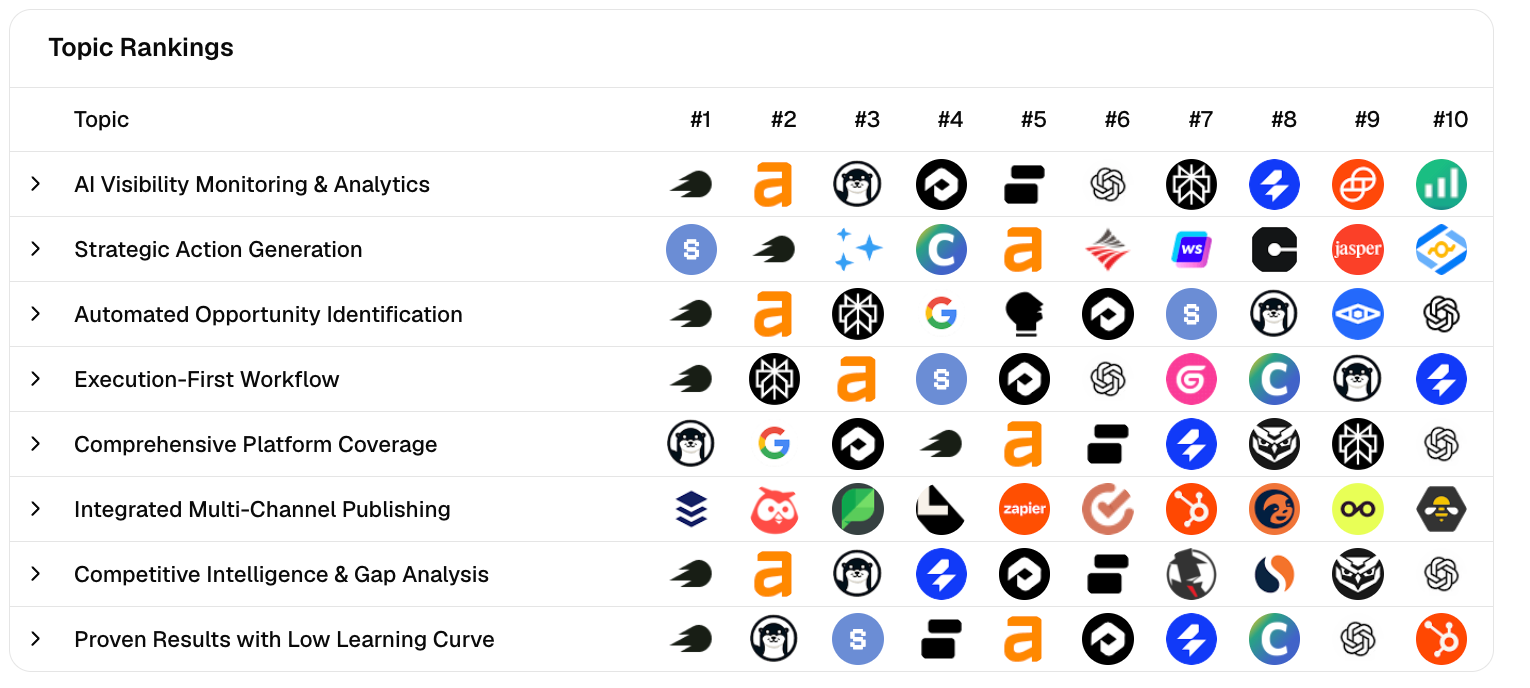
These platforms track which competitors are being cited for the queries that matter to your business, which sources AI models prefer for different topic areas, how competitors' share of voice shifts over time, and what content formats and structures earn the most citations. The "mention gap" report — available in several AI monitoring tools — is particularly valuable. It shows you the specific prompts and queries where competitors are appearing in AI answers but your brand is not. Each gap represents a concrete content opportunity.
This intelligence is time-sensitive. Research has documented cases where brand visibility, citation rate, and share of voice all declined by roughly a third within a five-week period. AI visibility is volatile; quarterly audits simply aren't fast enough to catch and respond to these shifts.
4. It Guides Content Strategy With Citation-Worthy Signals
Not all content is equally likely to be cited by AI models. AI search monitoring reveals the patterns behind what gets cited, giving your content team a clear blueprint.
The data points toward several citation-boosting content characteristics. Content that includes original statistics, data points, and citations tends to achieve substantially higher visibility in AI responses. Content freshness matters: pages updated within the last two months earn notably more citations than older content. Comprehensive topic coverage that addresses the full scope of a subject outperforms narrow, shallow pages. Clear structure with defined headings, lists, and direct answers to common questions makes content easier for AI models to extract. And strong E-E-A-T signals — demonstrable experience, expertise, authoritativeness, and trustworthiness — act as trust filters for AI systems deciding which sources to cite.
AI monitoring platforms show you exactly which of your pages are being cited, for which queries, and on which platforms. This lets your content team reverse-engineer success rather than guessing.
5. It Bridges the Gap Between Traditional SEO and Generative Engine Optimization
One of the most strategic insights from AI search monitoring is how traditional SEO and Generative Engine Optimization (GEO) interact. They aren't competing disciplines — they're complementary, and monitoring both surfaces reveals the connection.
Here's a critical finding: ChatGPT's search functionality uses Bing's index to retrieve web results. Content that performs well in traditional search has an additional pathway to being surfaced in AI-generated answers. But the relationship isn't one-to-one. Research shows that the overlap between top-10 organic results and AI Overview citations has been declining — meaning that ranking on page one no longer guarantees being cited in AI answers.
AI search monitoring helps you build a dual-optimization strategy. You can identify queries where you rank organically but aren't cited in AI answers (a content format or structure issue), queries where you're cited in AI answers but don't rank organically (an authority or backlink issue), queries where competitors dominate both surfaces (a priority gap to address), and queries where neither you nor competitors are well-represented in AI answers (a first-mover opportunity).
This cross-surface analysis is impossible without monitoring both channels simultaneously.
6. It Provides Early Warning for Algorithm and Model Changes
Search algorithms have always been moving targets. But the proliferation of AI search surfaces multiplies the number of systems you need to watch. Google updates its AI Overview behavior, OpenAI refines ChatGPT's citation logic, and Perplexity adjusts its source selection criteria — all independently and often without public announcements.
AI search monitoring platforms detect these shifts through pattern analysis. When your citation rates suddenly drop across a specific platform, or when the sources being cited for your target queries change, the monitoring platform flags it before you notice the traffic impact.
This early warning function is especially important because AI visibility can deteriorate quickly. A brand can lose a significant portion of its AI presence in just weeks without any change to its own content or SEO strategy. The cause might be a model update, a competitor's new content, or a shift in the platform's source selection criteria. Without monitoring, you wouldn't know until the damage was already done.
7. It Connects AI Visibility to Business Outcomes
The ultimate purpose of any SEO tool is to drive business results. AI search monitoring platforms are increasingly able to connect visibility metrics to downstream outcomes.
Advanced platforms can track citation-to-conversion paths — following the journey from an AI citation through to website traffic, lead generation, and revenue. This makes AI search optimization accountable in the same way that traditional SEO has been for years.
This matters politically within organizations, too. SEO budgets are under pressure partly because ROI is harder to prove in the age of zero-click search. When AI answers resolve user queries without generating clicks, traditional metrics suggest SEO isn't working — even when your brand is being recommended to thousands of users inside AI responses. AI search monitoring captures this invisible value and makes it reportable.
AI Search Monitoring vs. Traditional SEO Tools: What's the Difference?
If you're already using platforms like Semrush, Ahrefs, or Moz, you might wonder whether AI search monitoring is redundant. It isn't — the two categories solve fundamentally different problems.
Traditional SEO tools are built for the blue-link era. They track keyword rankings on Google, monitor backlink profiles, audit technical site health, and analyze organic traffic. These capabilities remain essential. Google still processes the vast majority of global search queries, and organic results still drive the bulk of website traffic for most businesses.
AI search monitoring platforms operate in a different layer entirely. They track surfaces that traditional tools can't see — the AI-generated answers, citations, and brand mentions happening inside ChatGPT, Perplexity, Google AI Overviews, and other AI search interfaces. The metrics are different (citations vs. rankings), the competitive dynamics are different (share of voice vs. position), and the optimization levers are different (content structure and freshness vs. backlinks and metadata).
The most effective approach is to use both in combination. Traditional SEO tools for the foundation, AI search monitoring for the emerging layer.
AI Search Monitoring vs. AEO vs. Traditional SEO Tools
Understanding where each tool category fits requires seeing the full picture side by side. These three categories are often conflated — but they solve different problems at different layers of the modern search stack.
Traditional SEO Tools | AI Search Monitoring | AEO Platforms | |
|---|---|---|---|
Primary focus | Rankings, keywords, backlinks | AI visibility tracking | Improving AI-generated answers |
Core metrics | Rankings, traffic, CTR | Citations, mentions, share of voice | Citation growth, answer inclusion, content influence |
Data sources | Google SERPs | ChatGPT, Google AI Overviews, Perplexity | Same as monitoring + optimization layer |
Capability | Analysis only | Monitoring only | Monitoring + execution |
Actionability | Indirect (via SEO improvements) | Insights only | Direct optimization actions |
Examples | Semrush, Ahrefs, Moz | AI visibility trackers | Vismore |
The key difference is that traditional SEO tools help you rank, AI search monitoring tools help you measure visibility — but AEO platforms go a step further by actively influencing how answers are generated. While traditional tools focus on rankings and traffic, AEO platforms are designed to influence how answers themselves are constructed.
As AI search becomes a primary discovery layer, the distinction between monitoring visibility and actively optimizing AI-generated answers is becoming a key competitive differentiator in SEO strategy.
As AI search evolves, this shift from measurement to execution is becoming critical. Brands that rely only on monitoring risk falling behind those that can directly optimize how they appear in AI-generated responses.
AI search monitoring measures visibility in AI-generated answers, while AEO platforms like Vismore actively optimize how brands are represented inside those answers.
In short:
Traditional SEO tools help you rank in search engines
AI search monitoring tools help you track visibility in AI answers
AEO platforms help you improve how your brand appears in those answers
Key takeaway: SEO optimizes for rankings, AI search monitoring measures visibility, and AEO defines the emerging layer where visibility can be actively shaped inside AI-generated answers. Together, these three disciplines form the complete modern search stack — and understanding where each one operates is the first step to building a strategy that performs across all of them.

How to Track AI Search Visibility: A Step-by-Step Framework
Adopting AI search monitoring isn't an all-or-nothing decision. Here's a phased approach that scales with your organization's maturity.
Phase 1 — Baseline Assessment. Start by auditing your current AI visibility. Most monitoring platforms offer trial periods or free assessment tools. Identify the queries and prompts that matter most to your business, check your current citation rates across the major AI platforms (at minimum, ChatGPT, Google AI Overviews, and Perplexity), and benchmark your position relative to your top three to five competitors.
Phase 2 — Continuous Monitoring. Set up ongoing tracking for your priority queries. Configure alerts for significant changes in citation rates, brand mentions, or competitive share of voice. In practice, teams often use dedicated platforms like Vismore to automate prompt tracking, citation analysis, and share-of-voice monitoring across AI search systems. At this stage, you're building the data foundation that will inform your content strategy.
Phase 3 — Content Optimization. Use monitoring data to refine your content. Identify your most-cited pages and understand why they work. Address citation gaps by updating or creating content that matches the patterns AI models prefer. Focus on freshness, depth, structure, and original data — the signals that monitoring reveals as citation-worthy.
Phase 4 — Cross-Surface Integration. Connect your AI search monitoring data with your traditional SEO analytics. Build dashboards that show both channels together. Identify the queries where your traditional and AI visibility are misaligned, and prioritize those for dual-optimization.
Phase 5 — Strategic Measurement. Extend your measurement framework to include AI-specific KPIs alongside traditional SEO metrics. Track citation-driven branded search lifts, monitor the sentiment and accuracy of AI-generated brand descriptions, and connect AI visibility to business outcomes where possible.
AI Search Monitoring Checklist
Identify priority prompts and queries that matter to your business
Track citation rates across ChatGPT, Google AI Overviews, and Perplexity at minimum
Monitor brand mentions in AI responses, even those without a direct link or citation
Analyze competitor share of voice to surface mention gaps
Review content freshness — update key pages at least every two months
Audit content structure for AI extractability: clear headings, bullet lists, direct answers
Set weekly alerts for significant shifts in citation rate or share of voice
Connect AI visibility data to downstream traffic and conversion metrics
What Are the Best AI SEO Tools for Search Monitoring?
The AI search monitoring landscape is evolving rapidly, with tools falling into two broad categories.
Traditional SEO platforms — such as Semrush, Ahrefs, and Moz — have begun introducing AI visibility features as extensions of their existing toolsets. These platforms are strong for foundational SEO work: keyword tracking, backlink analysis, and technical auditing. Their AI search capabilities are still developing, but their integration with existing workflows makes them a practical starting point for teams building a combined stack.
A newer category of purpose-built AEO platforms is emerging alongside them. These tools focus specifically on how brands appear in AI-generated answers — tracking citations and mentions, but increasingly enabling execution: helping teams structure, update, and optimize content in ways that directly influence AI citation behavior.
Platforms like Vismore represent the emerging category of AEO platforms that combine AI search monitoring with execution capabilities, helping brands not only measure visibility but actively improve how they appear in AI-generated answers across ChatGPT, Google AI Overviews, and Perplexity. This distinction — between observing AI visibility and being able to shape it — is where the next competitive advantage in search is being built.
For most organizations, the right approach is to start with monitoring — understanding where you stand — and then move toward execution as AI search becomes a more significant traffic and influence channel. At a minimum, any AI search monitoring setup should cover ChatGPT, Google AI Overviews, and Perplexity. Adding Gemini, Grok, and Claude extends coverage across the broader AI search ecosystem.
Common AI Search Monitoring Mistakes to Avoid
The first mistake is treating AI optimization as a replacement for traditional SEO. It isn't. Google still processes the vast majority of search queries, and its organic results remain the primary traffic driver for most websites. AI search monitoring adds a layer; it doesn't replace your foundation.
The second mistake is monitoring without acting. Dashboards and data are only valuable if they inform decisions. Every monitoring insight should connect to a content action, a structural improvement, or a strategic shift.
Third, avoid focusing on a single AI platform. Citation patterns differ dramatically across models. A strategy optimized for ChatGPT might leave you invisible on Perplexity or Gemini. Multi-platform monitoring is essential.
Fourth, don't assume that AI visibility is stable. It's not. Weekly monitoring is the minimum cadence for any brand that takes this channel seriously.
And finally, don't ignore the geographic dimension. AI models appear to have geographic biases in their brand recommendations, likely driven by training data composition and content language signals. Your visibility in AI search may vary significantly by market.
The Future of AI Search Monitoring: What's Coming Next
Paid AI placement is arriving. Google has been testing sponsored ads within AI Mode, and OpenAI has confirmed that advertising is coming to ChatGPT. When paid placement enters AI search at scale, the organic landscape will become significantly more competitive — making monitoring and early optimization even more critical.
Measurement will get more sophisticated. The current generation of AI monitoring tools focuses primarily on visibility and citation metrics. The next generation will increasingly connect these to business outcomes — revenue attribution, conversion path analysis, and ROI modeling for AI search investments.
Multi-modal monitoring will expand. As AI search extends into image, video, and voice interfaces, monitoring will need to follow. Tracking how your brand appears in AI-generated image results, voice assistant responses, and video summaries will become part of the standard monitoring stack.
Integration with content workflows will deepen. Rather than existing as a separate reporting layer, AI search monitoring data will feed directly into content planning, creation, and optimization workflows — closing the loop between insight and action.
The Window Is Open — But It Won't Stay That Way
Only a small minority of marketers are currently tracking AI citation visibility, despite a much larger number naming AI search optimization as a core priority. The measurement gap between ambition and execution is the largest in the current SEO landscape.
This gap represents an opportunity. The brands that build AI search monitoring into their operations now — while competitors are still debating whether it matters — will establish citation authority that compounds over time. AI models learn from existing patterns; early visibility tends to reinforce itself.
AI search monitoring won't make your SEO strategy successful on its own. But without it, your strategy is incomplete — optimized for a version of search that no longer fully represents how people find information and make decisions. The brands that thrive in 2026 and beyond will be the ones that see the whole picture, measure what actually matters, and move before their competitors do.
Ready to track your AI search visibility? Start with a baseline audit of your brand's presence across ChatGPT, Google AI Overviews, and Perplexity — and build from there.
AI search monitoring is emerging as a core layer of search analytics, as brands shift from optimizing for rankings to optimizing for visibility inside AI-generated answers.
FAQ
What is AI search monitoring?
AI search monitoring is the process of tracking how your brand, content, and competitors appear in AI-generated search results — including citations, brand mentions, and sentiment — across platforms like ChatGPT, Google AI Overviews, Perplexity, and Gemini. It focuses on AI-native metrics like share of voice and citation rate rather than traditional rankings.
How do you track AI search visibility?
You can track AI search visibility using specialized platforms that monitor prompts, citations, and brand mentions across major AI search systems. The process involves identifying priority queries, setting up continuous tracking, and analyzing citation rates and share of voice relative to competitors.
What is the difference between AI search monitoring and AEO?
AI search monitoring measures how your brand currently appears in AI-generated answers. AEO (Answer Engine Optimization) goes further — it uses that data to actively optimize how content is structured and surfaced, directly influencing citation behavior rather than just observing it.
Is AI search monitoring replacing SEO?
No. AI search monitoring complements traditional SEO by adding visibility into AI-generated answers — it doesn't replace rankings or organic search. Google still processes the vast majority of global queries, and organic results remain the primary traffic source for most websites. The two disciplines work best in combination.
Why do citation rates vary so much across AI platforms?
Each AI platform uses different retrieval methods, training data, and source selection criteria. Internal data from Vismore shows citation rates can vary by over 100x for the same query category across different AI models. This is why multi-platform monitoring — not single-platform tracking — is essential.
How often should you monitor AI search visibility?
Weekly monitoring is the recommended minimum for any brand treating AI search as a serious channel. AI visibility can shift significantly within weeks due to model updates, competitor content changes, or platform algorithm adjustments — quarterly audits are too infrequent to catch and respond to these movements.